Sunday, 12 June 2022


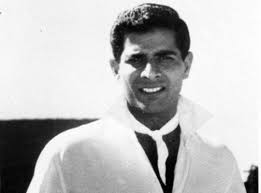
Jaisimha: Grace and Graciousness personified


A most unusual cricketer. Loads of talent, but little by way of result. Disappointed many; yet huge fan following. Highly  erudite but unutilized by the media.


Jaisimha was all romance. Handsome of bearing and handsome of heart, he was the man who brought glamour to the game on Indian cricket grounds in the post-war period as did those wonderful stylish colleagues of his, Salim Durani and Tiger Pataudi.


Whatever the elegant Jaisimha did sent reverberations of excitement among the crowds. The way he spoke, the way he walked, the way he batted had a distinctive aura of its own. Even his bowling action was a sinewy, snake-dance! His mere presence reflected an aroma of elegance, of style, of originality so very essential for performing artistes.


As youngsters we tried to copy his walk! It appeared that he was perpetually stepping tip-toes across shards of broken glass! He always had his shirt-collar raised in a casual, carefree manner. His shirts never seemed to have the top three buttons!


Yes, Jaisimha was above all a performing artiste. A man who had the ability to help people feel relaxed after the careworn, monotonous lives they led every day. He gave the impression of perpetual youth, an eternal sense of adventure, a feeling of

exhilaration. Adonis in excelsis.


Even in the hard struggle of international cricket Jaisimha found the time and the desire to laugh on the field, to play daring shots and also to have an encouraging word or two for both friends and friendly foes. Apocryphal perhaps, but it was said that when he went in to bat flying kisses from the stands were planted on him!


So popular was he that many stories of him keep surfacing through telling and re-telling. It was said that even the umpires had a soft corner for him! Actually Jaisimha was very popular with all and sundry because of the kind of man he was: graceful and gracious.


Jaisimha was a man who attracted headlines. Appropriately enough, he made his debut at the Mecca of Cricket, The Lord's, and more significantly made his first international headlines at the iconic Eden Gardens, where 80,000 knowledgeable addicts unanimously gave him a standing ovation. Against Richie Benaud's star-studded Aussies in 1959-60 the young hero became the first cricketer ever to have batted on each day of a 5-day Test match.


Began his first-class cricket career for Hyderabad as a middle-order batsman in 1954. The class was apparent on the first day itself. Well-balanced, whether forward or back, he was at ease in defence as well as in attack. Rare reviews projected him into the Indian Starlets team on its tour of Pakistan. Some splendid performances across the border and in the Ranji Trophy championship helped him to board the flight to England with Dattajirao Gaekwad's team in 1959.


The disastrous tour notwithstanding, Jaisimha's progress as a batsman of promise and intelligence was a distinct plus point. He did not send the Thames on fire, but the young Indian's fire of ambition got its necessary fuel. He quickly grasped that the road to the top of international cricket was full of burning embers and only the toughest could survive the ordeal.


Back home he waited for another opportunity and when the opportunity did arrive to play the Australians at Calcutta, the handsome youth was ready to take on the opposition. Ray Lindwall, Alan Davidson, Ian Meckiff, Richie Benaud and Ken McKay hardly inconvenienced him as his dogged defence held them at bay for over after over, hour after hour, day after day.


Going in at number 9 on the first day towards the end, he batted with composure to remain not out with 20 when the Indian innings ended on the 2nd day. Then when India was struggling in the 2nd innings, young Jai was sent in at number 4 a little after tea on the 3rd day. From then on began an innings of attrition which has no parallel. He batted on and on, throughout the 4th day and well after the lunch interval on the 5th day.


Even battle-scarred batters would have been proud of such a heroic display as this young man’s was. Certain in defence, equable in temperament, he was a man inspired. For the sake of his country Jaisimha sacrificed his natural aggressive style and helped to deny the Aussies an easy, expected victory. Batted for nearly a day and a half for just 71 runs!


Statistically it must be among the slowest on record, but believe it or not, not once did he appear to be pedestrian. Never before has a stone-waller received such an ovation. Even the hardened Aussies applauded his magnificent effort for they valued character then and they still do so now.


 Ironically far from looking dull, he looked extremely elegant as he middled ball after ball. Not a semblance of chance was offered; not once did he appear to be in any discomfort; never looked negative. So composed was he during the long vigil at the crease that when he drove two successive boundaries he hardly gave any suggestion of force. It was the Hyderabadi adaab culture at its best.


Within two years the same man was a totally different self. At Gardens now he was Genghiz Khan in full flight. Attacked Knight, Larter, Price and Titmus with such vehemence that more than once the bowler was on his haunches with hands on head as ball after ball screamed past him to the sight-screen. How can a self-respecting bowler have a fieldsman exactly behind his back in front of the sight-screen? But precisely that was the only way out to stop those scorchers.


Sheer murder, it was. But as Jaisimha walked back after his whirlwind century, I assure you, not a bead of sweat was on him, not a crease of his flannels out of place. Yes, he looked calm, unruffled, composed in the heat of aggression just as he looked elegance personified when gently caressing the ball just a few years back to Richie Benaud and company.


The high point of Jaisimha's career came in Australia in 1967-68. Initially omitted from the original touring party, he was requisitioned when injury laid low our fabulous spinner Chandrasekhar. Yes, replacing a spinner by a batsman is nothing unusual in India cricket!


But the main issue here is that Jaisimha went straight from the airport to the Test venue, 'Gabba in Brisbane. There he played two innings of remarkable maturity 74 and 109 and nearly took India to a remarkable victory.


Irony and melodrama followed Jaisimha throughout his cricket career. Obviously it was astonishing to find batsman Jaisimha replacing spinner Chandrasekhar; but what astounded still more was that he walked straight into the final XI although Sardesai, Saxena and Subramaniam were already there in the touring party as batsmen or whatever!


Mind you, most of the selectors were former Test players themselves. Actually it just goes to prove, if proof be at all necessary, that selectors ought to be men of knowledge and integrity, men of clean public image. No point having former Test cricketers as selectors who do not measure up to the high ideals required of them.


For a man of his vast potential and intelligence it is indeed ironical that Jaisimha, like some of his peers, was dreadfully out of his depth while representing India abroad. Jaisimha had a poor Test debut in England in 1959 but later too, apart from the superlative display at Brisbane, he made us tear our hair in disappointment. He tormented us daily. How can a batter with his kind of talent fail repeatedly even against mediocre oppositions?


On tours to West Indies, once in 1962 and then again in 1971 he had a total of just 160 runs in 13 completed innings. Just after the success against a strong Australian side at Brisbane, on the New Zealand leg of the twin tour he scored only 84 runs in 7 innings. Why on earth could he not show his real worth on these tours?


 Technique, temperament and skill he possessed in profusion, then why did he do less than justice to himself? Inconceivable indeed for a man who was so prolific, so inspiring on Indian pitches. If only he had got going more often abroad he would have done a great service to Indian cricket.


Jaisimha was at his best in the four seasons between 1960 and 1964. On Indian wickets he batted in regal splendour, banishing oppositions to all corners. Pakistan and England received the full measure of his wrath as his daring stroke-play made merry.


At Kanpur against Pakistan on his comeback match replacing Pankaj Roy a wonderful innings of 99 was cut short by a silly call for a single. Downcast he left the crease, dragging his bat on the turf. Even that melancholy sight had an aura of grace about it. He did not give a dirty look at his offending partner nor did he make any awkward gesture. Elegance personified even in pathos. These are the pictures that he will be remembered by for generations.


 Ultimately when he called it a day, he had 2056 runs at an average of 30.68 with 3 centuries. It goes without saying that his dashing blade did not measure up to his actual worth in terms of statistics. He was indeed a great disappointment. His talents were never quite realized. Why? Why? Why? We asked ourselves. But no answer ever came our way. Mysterious are the ways of men…


I personally feel he lacked the long-span of concentration, which is so very important to play the significant match-winning or match-saving innings. He got out after getting ‘set’ many times. He would do the difficult job of getting ‘set’ with ease and then with a casual stroke throw his wicket away. Was it lack of concentration? Repeatedly he committed the same mistake. Most unusual for a bright man like him.


Jaisimha is one of those cricketers who did not inflate their averages by plundering runs only against weak opponents. In fact against the comparatively weak New Zealand, he failed in every innings he played them. He seemed to lack the motivation. But Jai, the perfect gentleman, would be the first to deny this and would give credit to the New Zealanders for their successes. He would not have anything but the highest regard for the opposition.


Mothangalli Laxminarsu Jaisimha has been an idol of many including one named SMG, who genuinely hero-worshipped him for the way he helped the youngster in the latter's debut series in the Caribbean in 1971. When Jai’s batting form was going through hell even against the pathetically weak WI bowling of 1971, he had the large heartedness to help a highly talented newcomer to find his feet. That’s the real Jaisimha.


 Actually Jai was an immaculate gentleman by nature. He did not go about to catch anybody’s attention nor had any pretensions. Never tried to cultivate the media. Throughout his life he was genuinely interested in the development of youngsters and tried his best to assist them.


Such was his love for the game that he prolonged his first- class career till 1976. In a long span of 22 years he notched 12,616 runs at 36.66 with 30 centuries and took 396 wickets with his slow, gentle out-swingers and accurate off-breaks.


Had some very interesting interactions with him. The first one was at Chepauk where South Zone was hosting East Zone in a Duleep Trophy tie in 1973. Having just failed to overhaul SZ first innings total and being involved in a long stand with a tail-ender, I was extremely disappointed and did not wish to take the field in the 10 minutes change-over time. I went to the SZ dressing room and asked the SZ skipper Jaisimha, “Mr Jaisimha, may I please have a substitute to field for me for a short while?”


From the reclining seat beside him, his mate Venkataraghavan quipped, “If you can bat for so long, you can go and field as well.” I replied, “Well, whether I go to field or not is my issue. I just wanted to know if you do not allow a substitute, then we shall field with 10 men.” Venky was stunned to find the intricacies of the MCC law staring at him. But skipper Jaisimha, ever the gentleman, intervened, “Young man, please field for one over and then take a substitute.” Matter solved with ease. That’s typical Jaisimha.


Another meeting was in 1977 at Hyderabad while representing U-Foam team in the Moin-ud-Dowla Trophy. Jaisimha was our captain and he had invited me and Gopal Bose to play for U-Foam. I had a poor first match. On the morning of the 2nd match, Jaisimha told me, in the best of cricketing euphemism, ‘to rest’.


I requested him that I be allowed to go back home as I did not wish to spend time watching others play. Jaisimha was aghast, “You mean you do not wish to be in the reserves? If you wish to be a cricketer you have to learn to be among the reserves as well.” I told him, “No, no, I do not want to be a cricketer at all. I play only because I enjoy playing. I hate to sit out and waste my time. Please allow me to leave soon.” Ever the gentleman, Jaisimha got me air-tickets and I left that very afternoon.


Within two months, East Zone was playing Central Zone at Jaipur in a Duleep Trophy match. I happened to get the highest score for EZ. Believe it or not, at the tea interval, Jaisimha – then just appointed a national selector – knocked on our dressing room door, called me aside and said, “Raju, sorry to have dropped you from the U-Foam team. You showed excellent temperament and technique today on this under-prepared pitch. Are you still casual about your cricket?” I smiled and said, “I love to play cricket myself but I hate watching others play cricket. For me it’s a sheer waste of time.” Jaisimha had a hearty laugh as he patted me on the back. The ultimate gentleman, he was. Free of all complexes. Totally independent of mind. Exemplary manners complemented the handsome appearance.


Jaisimha was a delightful blend of exuberance and refinement. During the Moin-ud-Dowla Trophy matches at the Lal Bahadur Shastri Stadium in Hyderabad, the local idol Jaisimha would invariably invite fellow players for dinner at his Banjara Hills residence, where his delightful wife would keep delicious home-cooked kababs and biryani on the dining table. What a wonderful time the couple gave us. Hyderabad was the destination to be in the 1970s, for me at least. Since I was a teetotaller at the time, the Jaisimha family would not forget to keep fresh grape juice in plenty! He had the ‘old-fashioned’ culture of charm and subtlety in his veins.


 Intelligent and communicative, the man has rendered a yeoman's service to the cause of cricket. Free from woolly theories and prejudices, the cavalier persona of the man continued to be as attractive till the very end as he was with the guitar of a cricket bat in hand. He strummed melodious lyrics. An entertainer of the highest breed. An artiste who did not do justice at the international level to his exceptional talents. My eternal regret.


He was an excellent captain for South Zone and Hyderabad. After retirement he would have made an outstanding manager or mentor of India teams, or still better of India youth teams. Unfortunately that was not to be. His peers of hardly any worthwhile credentials were offered those important assignments for reasons better not be told!


Unlike most prominent cricketers, Jai was an erudite student of the game. The laws, special regulations, literature, history, technicalities, etcetera were well within his grasp. He was a delight to converse with. Ever-willing he was to share experiences in his cultured, well-modulated voice. He was the ideal man BCCI missed in mentoring young players.


An unique tale involving Jaisimha and Chuni Goswami shows the former at his magnanimous best. The current India soccer captain Chuni Goswami was in Hyderabad to attend an officers’- training course of his employer, State Bank of India. The artistic footballer was a very popular figure all over the country at the time.


Goswami was also playing in the local cricket tournaments at Hyderabad and seemed to have created quite an impression. Jaisimha the Hyderabad captain persuaded the State cricket selectors to select him for Hyderabad against Bengal in the Ranji Trophy quarter-final scheduled for February 1963.


Goswami travelled to Calcutta for the Ranji tie with Jaisimha’s Hyderabad side. Arriving here they found that the Bengal selectors had also chosen him for that particular tie!


Jaisimha, then the Hyderabad skipper, later related to me, “We could have raised an objection with BCCI. But that’s not the way this noble sport should be played. We were happy to see Chuni representing his own home State, Bengal.” Only a man of Jaisimha’s class can think on such lines.


Jaisimha further added, “However, I was desperate to have him in our XI. He would have been an asset as an all-rounder.” High regard, indeed, for India’s gold-medal winning football captain, who had just returned from Jakarta after winning the Asian soccer supremacy title.


Jaisimha was an entertainer of the highest breed. A multi-dimensional personality. A man free from prejudice. A man of style and glamour. An artiste of rare vintage. A man of sophistication and sensitivity.


He was most certainly the first to exhibit showmanship to the Indian cricket spectators in the post-war period.

Saturday, 11 June 2022


Jaisimha: Grace and Graciousness personified


A most unusual cricketer. Loads of talent, but little by way of result. Disappointed many; yet huge fan following. Highly  erudite but unutilized by the media.


Jaisimha was all romance. Handsome of bearing and handsome of heart, he was the man who brought glamour to the game on Indian cricket grounds in the post-war period as did those wonderful stylish colleagues of his, Salim Durani and Tiger Pataudi.


Whatever the elegant Jaisimha did sent reverberations of excitement among the crowds. The way he spoke, the way he walked, the way he batted had a distinctive aura of its own. Even his bowling action was a sinewy, snake-dance! His mere presence reflected an aroma of elegance, of style, of originality so very essential for performing artistes.


As youngsters we tried to copy his walk! It appeared that he was perpetually stepping tip-toes across shards of broken glass! He always had his shirt-collar raised in a casual, carefree manner. His shirts never seemed to have the top three buttons!


Yes, Jaisimha was above all a performing artiste. A man who had the ability to help people feel relaxed after the careworn, monotonous lives they led every day. He gave the impression of perpetual youth, an eternal sense of adventure, a feeling of exhilaration. Adonis in excelsis.


Even in the hard struggle of international cricket Jaisimha found the time and the desire to laugh on the field, to play daring shots and also to have an encouraging word or two for both friends and friendly foes. Apocryphal perhaps, but it was said that when he went in to bat flying kisses from the stands were planted on him!


So popular was he that many stories of him keep surfacing through telling and re-telling. It was said that even the umpires had a soft corner for him! Actually Jaisimha was very popular with all and sundry because of the kind of man he was: graceful and gracious.


Jaisimha was a man who attracted headlines. Appropriately enough, he made his debut at the Mecca of Cricket, The Lord's, and more significantly made his first international headlines at the iconic Eden Gardens, where 80,000 knowledgeable addicts unanimously gave him a standing ovation. Against Richie Benaud's star-studded Aussies in 1959-60 the young hero became the first cricketer ever to have batted on each day of a 5-day Test match.


Began his first-class cricket career for Hyderabad as a middle-order batsman in 1954. The class was apparent on the first day itself. Well-balanced, whether forward or back, he was at ease in defence as well as in attack. Rare reviews projected him into the Indian Starlets team on its tour of Pakistan. Some splendid performances across the border and in the Ranji Trophy championship helped him to board the flight to England with Dattajirao Gaekwad's team in 1959.


The disastrous tour notwithstanding, Jaisimha's progress as a batsman of promise and intelligence was a distinct plus point. He did not send the Thames on fire, but the young Indian's fire of ambition got its necessary fuel. He quickly grasped that the road to the top of international cricket was full of burning embers and only the toughest could survive the ordeal.


Back home he waited for another opportunity and when the opportunity did arrive to play the Australians at Calcutta, the handsome youth was ready to take on the opposition. Ray Lindwall, Alan Davidson, Ian Meckiff, Richie Benaud and Ken McKay hardly inconvenienced him as his dogged defence held them at bay for over after over, hour after hour, day after day.


Going in at number 9 on the first day towards the end, he batted with composure to remain not out with 20 when the Indian innings ended on the 2nd day. Then when India was struggling in the 2nd innings, young Jai was sent in at number 4 a little after tea on the 3rd day. From then on began an innings of attrition which has no parallel. He batted on and on, throughout the 4th day and well after the lunch interval on the 5th day.


Even battle-scarred batters would have been proud of such a heroic display as this young man’s was. Certain in defence, equable in temperament, he was a man inspired. For the sake of his country Jaisimha sacrificed his natural aggressive style and helped to deny the Aussies an easy, expected victory. Batted for nearly a day and a half for just 71 runs!


Statistically it must be among the slowest on record, but believe it or not, not once did he appear to be pedestrian. Never before has a stone-waller received such an ovation. Even the hardened Aussies applauded his magnificent effort for they valued character then and they still do so now.


 Ironically far from looking dull, he looked extremely elegant as he middled ball after ball. Not a semblance of chance was offered; not once did he appear to be in any discomfort; never looked negative. So composed was he during the long vigil at the crease that when he drove two successive boundaries he hardly gave any suggestion of force. It was the Hyderabadi adaab culture at its best.


Within two years the same man was a totally different self. At Gardens now he was Genghiz Khan in full flight. Attacked Knight, Larter, Price and Titmus with such vehemence that more than once the bowler was on his haunches with hands on head as ball after ball screamed past him to the sight-screen. How can a self-respecting bowler have a fieldsman exactly behind his back in front of the sight-screen? But precisely that was the only way out to stop those scorchers.


Sheer murder, it was. But as Jaisimha walked back after his whirlwind century, I assure you, not a bead of sweat was on him, not a crease of his flannels out of place. Yes, he looked calm, unruffled, composed in the heat of aggression just as he looked elegance personified when gently caressing the ball just a few years back to Richie Benaud and company.


The high point of Jaisimha's career came in Australia in 1967-68. Initially omitted from the original touring party, he was requisitioned when injury laid low our fabulous spinner Chandrasekhar. Yes, replacing a spinner by a batsman is nothing unusual in India cricket!


But the main issue here is that Jaisimha went straight from the airport to the Test venue, 'Gabba in Brisbane. There he played two innings of remarkable maturity 74 and 109 and nearly took India to a remarkable victory.


Irony and melodrama followed Jaisimha throughout his cricket career. Obviously it was astonishing to find batsman Jaisimha replacing spinner Chandrasekhar; but what astounded still more was that he walked straight into the final XI although Sardesai, Saxena and Subramaniam were already there in the touring party as batsmen or whatever!


Mind you, most of the selectors were former Test players themselves. Actually it just goes to prove, if proof be at all necessary, that selectors ought to be men of knowledge and integrity, men of clean public image. No point having former Test cricketers as selectors who do not measure up to the high ideals required of them.


For a man of his vast potential and intelligence it is indeed ironical that Jaisimha, like some of his peers, was dreadfully out of his depth while representing India abroad. Jaisimha had a poor Test debut in England in 1959 but later too, apart from the superlative display at Brisbane, he made us tear our hair in disappointment. He tormented us daily. How can a batter with his kind of talent fail repeatedly even against mediocre oppositions?


On tours to West Indies, once in 1962 and then again in 1971 he had a total of just 160 runs in 13 completed innings. Just after the success against a strong Australian side at Brisbane, on the New Zealand leg of the twin tour he scored only 84 runs in 7 innings. Why on earth could he not show his real worth on these tours?


 Technique, temperament and skill he possessed in profusion, then why did he do less than justice to himself? Inconceivable indeed for a man who was so prolific, so inspiring on Indian pitches. If only he had got going more often abroad he would have done a great service to Indian cricket.


Jaisimha was at his best in the four seasons between 1960 and 1964. On Indian wickets he batted in regal splendour, banishing oppositions to all corners. Pakistan and England received the full measure of his wrath as his daring stroke-play made merry.


At Kanpur against Pakistan on his comeback match replacing Pankaj Roy a wonderful innings of 99 was cut short by a silly call for a single. Downcast he left the crease, dragging his bat on the turf. Even that melancholy sight had an aura of grace about it. He did not give a dirty look at his offending partner nor did he make any awkward gesture. Elegance personified even in pathos. These are the pictures that he will be remembered by for generations.


 Ultimately when he called it a day, he had 2056 runs at an average of 30.68 with 3 centuries. It goes without saying that his dashing blade did not measure up to his actual worth in terms of statistics. He was indeed a great disappointment. His talents were never quite realized. Why? Why? Why? We asked ourselves. But no answer ever came our way. Mysterious are the ways of men…


I personally feel he lacked the long-span of concentration, which is so very important to play the significant match-winning or match-saving innings. He got out after getting ‘set’ many times. He would do the difficult job of getting ‘set’ with ease and then with a casual stroke throw his wicket away. Was it lack of concentration? Repeatedly he committed the same mistake. Most unusual for a bright man like him.


Jaisimha is one of those cricketers who did not inflate their averages by plundering runs only against weak opponents. In fact against the comparatively weak New Zealand, he failed in every innings he played them. He seemed to lack the motivation. But Jai, the perfect gentleman, would be the first to deny this and would give credit to the New Zealanders for their successes. He would not have anything but the highest regard for the opposition.


Mothangalli Laxminarsu Jaisimha has been an idol of many including one named SMG, who genuinely hero-worshipped him for the way he helped the youngster in the latter's debut series in the Caribbean in 1971. When Jai’s batting form was going through hell even against the pathetically weak WI bowling of 1971, he had the large heartedness to help a highly talented newcomer to find his feet. That’s the real Jaisimha.


 Actually Jai was an immaculate gentleman by nature. He did not go about to catch anybody’s attention nor had any pretensions. Never tried to cultivate the media. Throughout his life he was genuinely interested in the development of youngsters and tried his best to assist them.


Such was his love for the game that he prolonged his first- class career till 1976. In a long span of 22 years he notched 12,616 runs at 36.66 with 30 centuries and took 396 wickets with his slow, gentle out-swingers and accurate off-breaks.


Had some very interesting interactions with him. The first one was at Chepauk where South Zone was hosting East Zone in a Duleep Trophy tie in 1973. Having just failed to overhaul SZ first innings total and being involved in a long stand with a tail-ender, I was extremely disappointed and did not wish to take the field in the 10 minutes change-over time. I went to the SZ dressing room and asked the SZ skipper Jaisimha, “Mr Jaisimha, may I please have a substitute to field for me for a short while?”


From the reclining seat beside him, his mate Venkataraghavan quipped, “If you can bat for so long, you can go and field as well.” I replied, “Well, whether I go to field or not is my issue. I just wanted to know if you do not allow a substitute, then we shall field with 10 men.” Venky was stunned to find the intricacies of the MCC law staring at him. But skipper Jaisimha, ever the gentleman, intervened, “Young man, please field for one over and then take a substitute.” Matter solved with ease. That’s typical Jaisimha.


Another meeting was in 1977 at Hyderabad while representing U-Foam team in the Moin-ud-Dowla Trophy. Jaisimha was our captain and he had invited me and Gopal Bose to play for U-Foam. I had a poor first match. On the morning of the 2nd match, Jaisimha told me, in the best of cricketing euphemism, ‘to rest’.


I requested him that I be allowed to go back home as I did not wish to spend time watching others play. Jaisimha was aghast, “You mean you do not wish to be in the reserves? If you wish to be a cricketer you have to learn to be among the reserves as well.” I told him, “No, no, I do not want to be a cricketer at all. I play only because I enjoy playing. I hate to sit out and waste my time. Please allow me to leave soon.” Ever the gentleman, Jaisimha got me air-tickets and I left that very afternoon.


Within two months, East Zone was playing Central Zone at Jaipur in a Duleep Trophy match. I happened to get the highest score for EZ. Believe it or not, at the tea interval, Jaisimha – then just appointed a national selector – knocked on our dressing room door, called me aside and said, “Raju, sorry to have dropped you from the U-Foam team. You showed excellent temperament and technique today on this under-prepared pitch. Are you still casual about your cricket?” I smiled and said, “I love to play cricket myself but I hate watching others play cricket. For me it’s a sheer waste of time.” Jaisimha had a hearty laugh as he patted me on the back. The ultimate gentleman, he was. Free of all complexes. Totally independent of mind. Exemplary manners complemented the handsome appearance.


Jaisimha was a delightful blend of exuberance and refinement. During the Moin-ud-Dowla Trophy matches at the Lal Bahadur Shastri Stadium in Hyderabad, the local idol Jaisimha would invariably invite fellow players for dinner at his Banjara Hills residence, where his delightful wife would keep delicious home-cooked kababs and biryani on the dining table. What a wonderful time the couple gave us. Hyderabad was the destination to be in the 1970s, for me at least. Since I was a teetotaller at the time, the Jaisimha family would not forget to keep fresh grape juice in plenty! He had the ‘old-fashioned’ culture of charm and subtlety in his veins.


 Intelligent and communicative, the man has rendered a yeoman's service to the cause of cricket. Free from woolly theories and prejudices, the cavalier persona of the man continued to be as attractive till the very end as he was with the guitar of a cricket bat in hand. He strummed melodious lyrics. An entertainer of the highest breed. An artiste who did not do justice at the international level to his exceptional talents. My eternal regret.


He was an excellent captain for South Zone and Hyderabad. After retirement he would have made an outstanding manager or mentor of India teams, or still better of India youth teams. Unfortunately that was not to be. His peers of hardly any worthwhile credentials were offered those important assignments for reasons better not be told!


Unlike most prominent cricketers, Jai was an erudite student of the game. The laws, special regulations, literature, history, technicalities, etcetera were well within his grasp. He was a delight to converse with. Ever-willing he was to share experiences in his cultured, well-modulated voice. He was the ideal man BCCI missed in mentoring young players.


An unique tale involving Jaisimha and Chuni Goswami shows the former at his magnanimous best. The current India soccer captain Chuni Goswami was in Hyderabad in 1963 to attend an officers’- training course of his employer, State Bank of India. The artistic footballer was a very popular figure all over the country at the time.


Goswami was also playing in the local cricket tournaments at Hyderabad and seemed to have created quite an impression. Jaisimha the Hyderabad captain persuaded the State cricket selectors to select him for Hyderabad against Bengal in the Ranji Trophy quarter-final scheduled for February 1963.


Goswami travelled to Calcutta for the Ranji tie with Jaisimha’s Hyderabad side. Arriving at Calcutta they found that the Bengal selectors had also chosen him for that particular tie!


Jaisimha, then the Hyderabad skipper, later related to me, “We could have raised an objection with BCCI. But that’s not the way this noble sport should be played. We were happy to see Chuni representing his own home State, Bengal.” Only a man of Jaisimha’s class can think on such lines.


Jaisimha further added, “However, I was desperate to have him in our XI. He would have been an asset as an all-rounder.” High regard, indeed, for India’s gold-medal winning football captain, who had just returned from Jakarta after winning the Asian soccer supremacy title.


Jaisimha was an entertainer of the highest breed. A multi-dimensional personality. A man free from prejudice. A man of style and glamour. An artiste of rare vintage. A man of sophistication and sensitivity.


He was most certainly the first to exhibit showmanship to the Indian cricket spectators in the post-war period.

Sunday, 5 June 2022


             Vijay Hazare: a solitaire in solitude

Did you know that a kind of apartheid system existed in Indian cricket just eight decades from today? Not the vicious form of officially recognized policy of racial-segregation that dominated South African life and cricket. But no less despicable was the communal discrimination in India. And one of the foremost victims of that trend of thought was none other than Vijay Samuel Hazare.

When the Quadrangular cricket tournament was at its high noon, the Indian Christians including the Anglo-Indians had no place in the sun. The Britons in residence in India competed with the Parsees, the Hindus and the Muslims but they would not rub shoulders with the local Christians on the cricket field!

Thankfully as the nationalist movement gained momentum in the 1930s, the Indian Christians under the nomenclature of 'Rest' were welcomed with open arms for the first time in 1937 as the fifth team in the inter-community cricket tournament.

Just imagine one of India's greatest batsmen, Vijay Hazare, was not considered eligible to play in the country's premier tournament of the time, the Quadrangular, only because he happened to be of the Roman Catholic faith.

When finally sanity dawned and the Quadrangular became Pentangular in character, the magnificent Vijay Samuel Hazare reeled off those double and triple hundreds in revenge and retribution for all those seasons spent in isolation.

When the Pentangular began, Vijay Hazare came to the forefront of Indian cricket. Immediately he put everyone in the shade, including the great Vijay Merchant then a premier batter of the world. In the few years of Pentangular, between 1937 and 1944, he scored 1 triple century, 1 double century, 2 centuries and 4 fifties in only 14 innings with an average of 101 and an aggregate of 1221 runs.

After making his first-class debut in 1934 for Maharashtra, Hazare lost the prime of his cricket life to the World War II. Born at Sangli in Maharashtra in 1915, Vijay Hazare could make his official Test debut only at the matured age of 31, when he went to England with Iftikar Ali Khan Pataudi’s team in 1946. His debut was at Lord’s with 31 and 34. He had earlier been to England with the ill-organized Rajputana side in 1938 and hardly had any worthwhile exposure.

Despite the very late start to his Test cricket career, Hazare exhibited to the world that he was not to be trifled with. In 1947-48, he went to Australia with Lala Amarnath’s team and was an outstanding success. Ray Lindwall and Keith Miller, the foremost and fearsome pace duo in Don Bradman’s arsenal, held no terrors for him. Far from being bogged down against the best team in the world, Hazare alerted the cricket world with centuries in either innings in the Adelaide Test.

No one else had ever treated Bradman’s team, reputedly the best-ever in international cricket, with such disdain. He was the first among Indians to have scored a century in each innings of a Test match. Not against any namby-pamby team but against the best team in the world at the time and on their own backyard. It appeared that he was giving a fitting reply to all those who had conspired to keep his guru, Prof Deodhar, out of the India team in the 1930s.

In Australia his bowling arm created quite a sensation. Twice he dismissed the ‘greatest-ever’ Don Bradman by rattling his stumps. Once for 13 – Bradman’s only failure in that series – and the next after 201. Surely no mean feat. How many bowlers can claim to have ‘bowled’ Sir Don twice?

Vijay Hazare was nothing less than a marvel. Most certainly among the greatest batsmen India has produced. He played the fearsome pace of Ray Lindwall, Keith Miller and Fred Trueman without even thigh pads. The helmet and chest-guard would surely have been a self-inflicted insult. He played the swing and cut of Alec Bedser and Fazal Mahmood with rare composure. Even world-class spinners were hardly a headache for this man who appeared to have possessed the broadest of bats in existence!

But most important, he played on uncovered pitches as did the others of his time, where the batsmen were exposed to the vagaries of nature. This is one aspect of cricket that is strangely forgotten when cricket followers start comparing the past greats with the modern masters. This issue of playing on cover-less, moisture-laden pitches day in and day out required the best of technique just to survive. To master such conditions, one had to be a rare breed indeed. It was under such trying conditions that Vijay Hazare not only survived but prospered against the world’s best.

He did not have the benefit of any influential lobby in Indian cricket for any kind of support off-the-field. His was always a lonesome existence. A genuine protégé of Prof Dinkar Balwant Deodhar. Vijay Hazare never received any support from any quarter; nor ever asked for any. In fact he never needed the help of any influential administrator.

 In India even the very best generally require some initial ‘backing’ for the early opportunities. But not Vijay Hazare. His best friend was his bat and he let his bat do the talking. With a very non-conventional stance of bending low on the bat, the master batter dominated world cricket in the post-war decade. His hands on the handle were far apart from each other.

These technical issues just go to reveal that he was not concerned about any so-called orthodox, conventional methods. His patent stroke was the square-cut, for which he would at times draw his right-foot outside the leg stump and smash the ball in line with the stumps between point and cover. This particular stroke later we found Chandu Borde, Hazare’s protégé, exploiting to the maximum.

 Vijay Samuel Hazare stood head and shoulders above all his contemporaries by sheer weight of performance. His run-scoring ability and his consistency have hardly ever been matched, earlier or later. Twice he scored triple centuries in first-class cricket.

One of those was a gem of 316 for Maharashtra against Baroda in 1939-40, which happened to be his first century in Ranji Trophy. The other triple century, 309 out of a total of 387, was against the Hindus in the Pentangular Final of 1943, which happened to be the highest score in the communal tournaments of the time.

The domination was such that while Hazare scored 309, from the other end just 78 runs were scored! In the previous match he toyed with the Muslim attack by scoring 248, the next best batter scored 66.

These two magnificent innings proved that Hazare had the ability to tear an attack apart in answer to those who said that he could not decimate the opposition. Was it done in revenge for not being allowed to play in the Quadrangular? Hazare, a man of very few words, had no time for verbal duels. He preferred to silence his detractors through the broad striking willow of his.

As if this was not enough, Hazare saw to it that his name was forever sculpted in the annals of world cricket records. In 1946, with Gul Mohammed, he amassed 577 runs for the 4th wicket against CK Nayudu’s Holkar in the Ranji Trophy final of 1946-47. This partnership of 577 remained the highest-ever partnership for any wicket till 2006.

 The partnership of 577 still remains the highest 4th wicket record in world cricket. This is one world record that has stayed on for decades and might remain that way for all time to come. This would indeed be a fitting tribute to a man to a very deserving man, who shunned publicity like plague throughout his life.

On Hazare’s Ranji Trophy debut in 1934 the opposition happened to be the ultimate champion, Bombay. Medium-pacer Hazare captured 6 wickets for 73 off 43.3 overs to end Bombay’s innings at 286. In reply after Maharashtra’s initial collapse, with his guru Prof Deodhar (57) the young debutant Vijay Hazare (65) was associated in a 117 run partnership for the 7th wicket. But Maharashtra finished at 260 giving Bombay a scare in their run to the title. An all-rounder was born to serve the nation.

 It is very conveniently forgotten that Vijay Hazare was the first captain to lead India to a Test match victory. For all their leadership abilities, neither CK Nayudu nor Lala Amarnath nor Pataudi (Sr) could achieve a similar significant landmark.

Hazare’s young lieutenants saw to it that England (then MCC) was defeated at Chepauk in 1951-52 to give India her first victory in her 25th Test match. In that match, Pankaj Roy and Polly Umrigar did their captain and country proud with centuries. The ever-green all-rounder Vinoo Mankad was the chief architect of the famous innings victory with 12 wickets.

Following year, Hazare was leading India in England. The murky environment had the Indians in no end of trouble. But in those gloomy forebodings, one man – Vijay Hazare – stood out along with his young colleague Vijay Manjrekar. In the 1st Test at Leeds with Bedser and Trueman on the rampage, India lost 3 wickets for 42 before the two Vijays – Hazare (89) and Manjrekar (133) – stood rooted to the crease to build a partnership of 222 runs.


In the second innings as India lay in shambles with 4 wickets down for 0 runs (yes, you read right, 4 wickets down for 0 runs), again it was the reassuring stocky figure of the captain who shouldered the crisis with a stolid 56. Such acts were frequent with Hazare the magnificent, but were never highlighted in the annals of Indian cricket history. His outstanding achievements always seemed to receive only a passing mention!


 In those days Test matches were hardly played on a regular basis. However, foreign Test players arrived in India with combined teams (far stronger than some of the current Test sides) to play Tests which were regarded as unofficial Tests. These strong, combined sides were known as Commonwealth teams


These teams had men of the calibre of Frank Worrell, George Tribe, Bruce Dooland, Sonny Ramadhin and others of international repute. Against such strong teams, Hazare made it a habit of scoring highly and consistently. At Eden Gardens, twice he met the Commonwealth teams and on both occasions he collected his usual quota of 100 plus runs.


Against the 1st Commonwealth side in 1949, India was losing 0-1, when Hazare took over the leadership at Calcutta. Immediately a change was noticed as India went on to wrap up the series 2-1. After the magnificent victory at Eden when captain Hazare’s two unbeaten knocks of 175 and 31 helped to the level the series, he was chaired off the ground by the Gardens’ crowd. At Eden Gardens, they knew their genuine hero.


Invariably he led the India teams which were full of ‘passengers’, having been selected not on merit. Skipper Hazare very sensibly allowed the selectors to do their job and never got involved with any personal recommendations of his. He preferred to concentrate on his own responsibility of playing cricket on the field. It was certainly not the captain’s fault that most of our national selectors suffered from provincial bias and lack of integrity.


Despite his achievements as India captain, I personally feel he would have scaled greater heights as a batsman without the additional responsibility of captaincy. Like a true warrior he shouldered the burden. How I wish the magnificent performer was spared the negativity of the petty mediocrity around him, who formed groups with communal and provincial agendas.


Vijay Hazare enjoyed a very good rapport with the cricket connoisseurs all over the country. Eden Gardens seemed to be among his particular favourite, where he rarely failed. After his Eden vigil, along with his dear friends Hemu Adhikari and Dattu Phadkar, he would be welcomed at the Samarth residence on Lake Road for his favourite shrikhand.


He was indeed a phenomenon. No pitch bothered him. No condition upset him. No opposition scared him. While at the crease he was in a cocoon of his own without a care in the world. It was said that his concentration was such that while he batted he would not even speak to his batting partner!


Vijay Samuel Hazare did not enjoy the luxury of injuries and lack of form. He was a warrior first and foremost. He remained a warrior till the end in the mould of his master, Prof Deodhar. They were the disciples of Shivaji Maharaj – named Rajrishi by Swami Vivekananda – who would fight for the honour of their homeland till the last drop of blood. Hazare did not waste time and effort bothering about batting positions, team selection or match situations. Not even did he worry whether he was the captain or not.


While Hazare is praised for his batting prowess, there is a tendency to forget his bowling potential. He thrived on dual responsibilities. He had an unusual action. Rather than bowling over-arm, he had a very prominent side-arm or round-arm action, almost similar to the Sri Lankan Lasith Malinga. But that did not stop his out-swingers and off-cutters from getting 599 scalps in first-class cricket and 20 victims in Test matches, which of course included the small matter of dismissing Sir Don twice.


 In only 30 Tests over a span of 7 years, he scored 2192 runs at a most impressive average of 47.65 with 7 centuries. In first class matches he scored 18,754 runs at 58.06 with 60 centuries.


The great batsman was a great human being, too. Self effacing modesty was his hallmark. He was a generous man who influenced a whole generation of top-class cricketers, including Chandu Borde. The short, strong man strode like a colossus but with the feet firmly on the ground. Like his guru, Prof Deodhar, the immortal Vijay Hazare was close to the soil and close to the young players around him.


He was the role model of the 50s, 60s and 70s generations. At a time when cricketers continued to get chances despite repeated failures, Hazare’s career was cut short after just one unsuccessful series in West Indies. All his phenomenal performances were forgotten.


Just two months back in India, Hazare’s two sterling innings of 76 at Delhi and 146 not out at Bombay helped India to defeat Pakistan in the inaugural series between the neighbours. All these match-winning knocks were brutally ignored. Tortured and crucified, the highly disciplined spiritual man remained true to his faith in Christianity and cricket till the last breath.


Extremely quiet he was on and off the field. Hazare would guide only when asked. Never on his own initiative. He would never impose his will on others. The young players of Maharashtra, Central India and later Baroda found in him an inspiring role-model because the highly reticent gentleman taught not by words but by action.


It is to the credit of Board of Control for Cricket in India (BCCI) that they have immortalized his name through the Vijay Hazare Trophy. When the grand gentleman breathed his last in 2004, he at least had the satisfaction to know that Indian cricket had not forgotten him.


Ironically he too was a victim of favouritism 30 years after his retirement. When the Sharjah cricket administration decided to honour former Indian players with substantial monetary packets in the early 1980s, the powers-that-be conveniently forgot Merchant, Mushtaq and Hazare. Their first choice in the inaugural year of 1982 fell on a wicket-keeper-batsman who had played 4 times for India and had a batting average of 9.5! Yes, it is true!


In the late 1970s when our Bengal coach MP Parmar spoke of Vijay Hazare he would first put his hands together and place them on his forehead and only then he would enchant us with the facets of his guru’s life. That’s the kind of respect Vijay Hazare received from players who were lucky to come in close contact with him. Respect he never demanded; he earned.


Hazare played in the Lancashire Leagues for Rawtenstall in between his long first-class career that stretched from 1934 to 1966. Later his protégé Chandu Borde too was a very successful and popular figure with Rawtenstall.


The magnificent all-rounder Chandrakant Gulabrao Borde found it difficult to describe the great man, who was his mentor in more ways than one. So excited was Chandu-bhai that he did not know where to start from and how to end the anecdotes. He would praise a certain aspect and suddenly deviate into another equally sterling quality. Very, very rarely would you come across such a gem of a role-model.


As a batsman, he was without any semblance of doubt among the best we have produced as yet. A solitary self who never bothered about any support on or off the field.