Wednesday, 20 July 2022


The inseparable trio: Raja, Rana and Raju

Our lives got entangled from May, 1965. CAB had organized a cricket coaching camp at Calcutta’s Deshopriyo Park for south Calcutta-based trainees. Three young hopefuls arrived with their heads shaved: after-effects of recent upanayan or mundan ceremony. All three had four-letter names beginning with R: Raja, his twin Rana and Raju. It was a case of instant rapport. An association that only death could tear apart.

The similarities continued in various ways but the contrasts were more apparent. Raja and his twin brother Rana had nothing in common except their dates of birth and upanayan. Raja hated conflicts yet controversies courted him throughout his life. He liked the simple pleasures of life but his life was full of complex issues. He loved to rest and relax but he never got the scope to feel comfortable. His was indeed a very unusual life-style.

When Raja first played for Bengal Schools in 1965 he was primarily a wicket-keeper batsman. Such was his natural talent that he went for the trials of the Indian Schoolboys team as a wicket-keeper. His leg-side gathering was absolutely top quality: safe and delectable. Soft hands and excellent anticipation were his forte.

 His approach to batting was exemplary: cool and confident; superb defensive technique and safe aggression. An ideal opener he was. Men of the vision of Hemu Adhikari, Khandu Rangnekar and Vijay Merchant were extremely impressed by his temperament and technique.

Prior to the England tour with the Indian Schoolboys team in the summer of 1967, at the trials the selectors were so impressed by his batting skills that he was asked to concentrate on his batting and to give up the stumper’s job. In fact when the Indian Schoolboys flew to Heathrow, Raja Mukherji and Syed Kirmani went as batsmen. The wicket-keeper’s slot went to the best of the lot, AAS Asif of Hyderabad (later settled abroad).

After the stupendous success in England of both Raja Mukherjee and his Bengal-mate Dipankar Sarkar, the unorthodox leggie, both were immediately playing first-class cricket for Bengal and East Zone. Both needed jobs and the Indian Railways offered them employment. Thus they departed from east zone to play in the north zone for the combined Indian Railways team based at Delhi.

Raja’s problems began almost immediately. Although he scored two consecutive centuries in the north zone Ranji Trophy ties, he was overlooked for the Duleep Trophy matches. Not used to set-backs, this omission hurt him to such an extent that he decided that he would give up his job and return to the folds of Bengal. He just could not get used to the environment available for the railway lads at Delhi at the time: railway-coach accommodation; meager food rations; squalid surroundings.

Raja was a very soft and sensitive soul.  Lost his armed-forces father early in life to an accident and was brought up by his widowed mother in straitened circumstances at her brothers’ family residence at Gariahat in south Calcutta. Raja never quite had the confidence of youth. Perpetually anxious, he gave every indication of a young man in need of assistance.

After a few seasons with Railways he returned to Bengal but by then the highly talented youngster was in a different world altogether. Our earlier association of school days was missing. Although psychologically close, we hardly met. I was deeply into my studies and Raja joined the Fertilizer Corporation of India at its Calcutta office.

Then in 1972 Raja and I were playing together for Bengal and East Zone. Unfortunately he never received the support he needed around this time from his peers. Some senior players appeared to be distinctly jealous of his early successes. Once when Raja had scored two centuries in successive Ranji Trophy matches and was going for his third, the Bengal innings was declared with Raja stranded at 84. There was no conceivable reason for the declaration. We had already got the 1st innings lead against a strong Bihar combination and the match was heading for a tame draw. But one could make out that sheer envy was the real and the only reason for the declaration.

On several occasions he was dropped from the XI and Bengal’s reserve stumper was played as an opener instead! Players who were nowhere near him by any yardstick of comparison whether in terms of potential or performance were preferred because they belonged to powerful lobbies. Such instances are very common in India and have been happening for the last 100 plus years.

But not everyone can accept such injustices easily. Raja happened to be one of them. He fell into a nadir of depression. He just could not be brought out of his shell. It was sheer hell for this highly sensitive man. He became over sentimental for no fault of his own. No amount of medication could help him to recover. He seemed to have fallen into a pit of ‘no-return’. The subtle wit of his had evaporated, although the charming smile remained. Our happy times at Shantiniketan with Raja rendering superlative Tagore songs in his soulful voice were gone forever.

The natural talent was nipped in the bud. Men who were supposed to be guiding young hopefuls hardly did justice to their job. He seemed all at sea till a lady from Assam married him and extended the much-needed support. In time their wonderful daughter and her matured husband took complete charge and gave Raja the rest that he deserved. His early life was full of successes; his mid-life crisis extended to old age but thankfully his final years were full of health, happiness and bonhomie with his grand-daughter. He died in the full knowledge that his family members were all safe and sound. He most certainly deserved the grace that God blessed him with in his last years.

Born in May 1951, his early success gave every indication that he was Test match material as an opener. In 1967 in England he scored a superlative century at Birmingham and was promised a financial award by a Bollywood film actor. After the media publicity surrounding the actor’s ‘benevolence’ subsided, the actor most conveniently forgot about the offer! The financial bonanza of a prize – Raja desperately needed it at the time – never did arrive!

Later in 1968 Raja led the Indian Schoolboys to Australia. There he received his compensation thousand times over when Sir Don took time to spend with the Hemu Adhikari-managed kids. The photograph of Raja with the Greatest-Ever is certainly his most prized possession.

One serious misconception needs to be rectified. Sunil Gavaskar and Raja Mukherji never played together for Indian Schoolboys. When Gavaskar played against the London Schoolboys in India, his opening partner was Ramesh Nagdev, a dashing opener, who later settled abroad.

In his last first-class match for Bengal Raja Mukherjee helped my team to win outright against Orissa in a very low-scoring match at his favourite Eden Gardens. Despite a runner he stayed at the crease till the job was complete. He ignored the excruciating pain of a pulled muscle and held on. The selectors decided to rest him for the next match to help him to recover.

Unfortunately his twin brother Rana made some unnecessary caustic remarks against the selectors in the following day’s newspaper. The selectors were livid. Raja was never chosen again. He paid the price for someone else’s over-reaction.

That’s how his life spanned out. His whole life seemed to be guided by others! Lost a real gentleman-friend who was far above all pettiness in life. Even in distress, the handsome face never lost its charming, innocent smile. I know Anandamayi Ma will always be beside my soul-mate.


Sunday, 17 July 2022


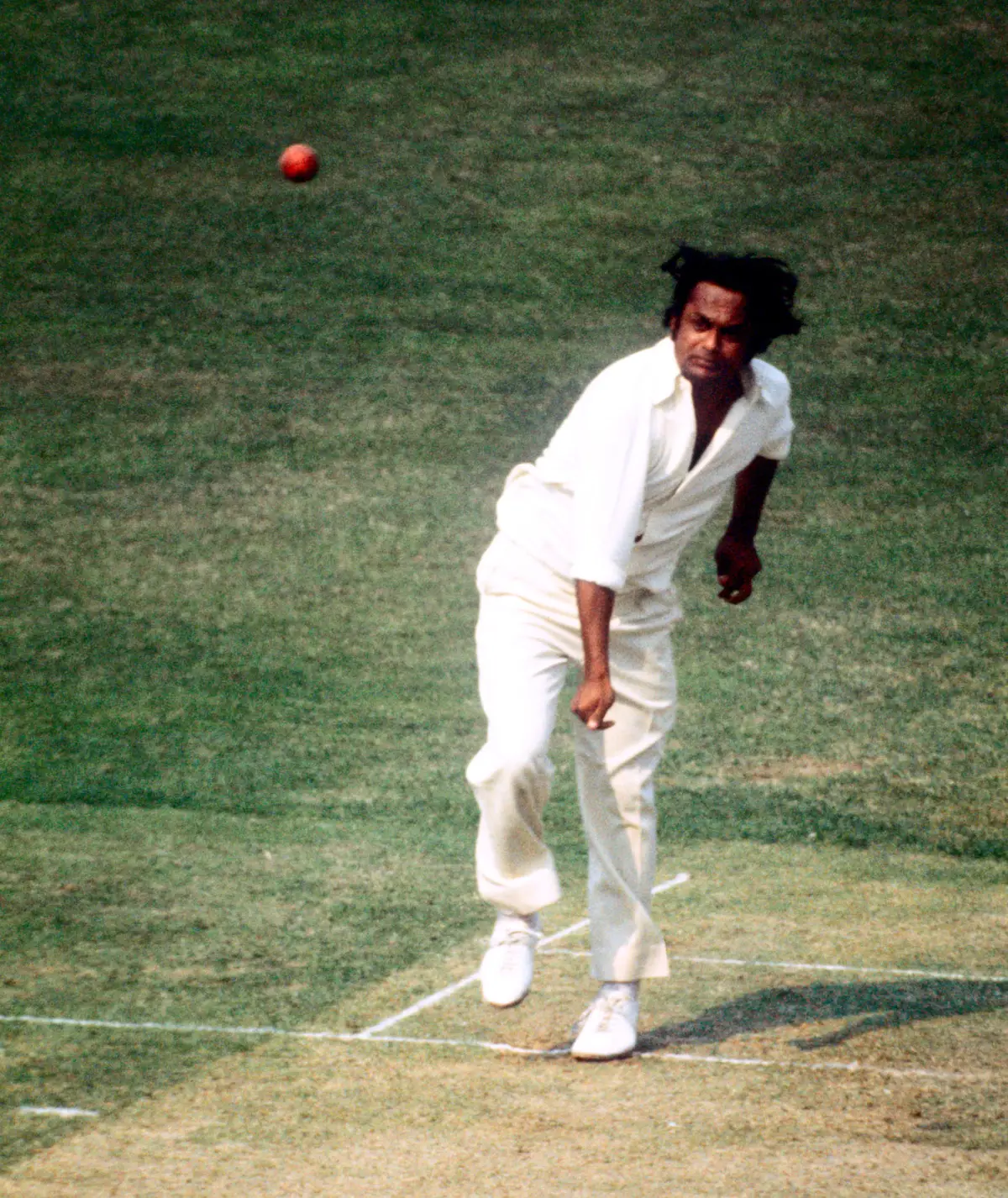
Erapalli Prasanna: the champion spin-wizard


Erapalli Prasanna was the man who began the trend of superlative Karnataka players in the national team. He was the pioneer who brought the erstwhile Mysore into cricketing limelight with his magical fingers and fertile brain. In his peak he also happened to be the best off-spinner in the world who earned the highest the respect of the best of batsmen from around the globe. Hardened, cynical critics too had no option but to rate him as among the best off-spinners to have graced the game.

The diminutive, rotund man hardly looked to be a cricketer. He did not possess the tell-tale signs of a sportsman. Not many would give him a second look. No presence, no charisma. But with a ball in hand at the bowler's end, he achieved gigantic proportions. Made life miserable for batters. He made the best of international batsmen dance to his tunes.

Erapalli Anantrao Prasanna was a conjurer. A man with magic in his fingers. He knew the art of how to cast a voodoo spell. He would coax and cajole; confuse and condemn. The art of spinning was embedded within the marrow of his fingers. But he was not a mere spinner who would use his fingers only. He used his brains. Brought into the art of finger spin the academic orientation of a qualified engineer.

If his physique gave a false impression, his action was no less. A few short steps and out would come a tossed-up delivery. Nothing unusual; just the plain routine action that every orthodox spinner would indulge in. But that tossed-up ball had a spell of voodoo within. It would turn a yard at times; may be just a couple of inches on occasions. But then it would also hang in mid-air at Prasanna's will, of course, before its descent.

Amazingly he could make the off-spin delivery bounce as high as an orthodox wrist spinner. Goodness knows how he did it! But this was not the end of the problems for batsmen. He would, I am certain, utter some mantras and the off-spinning ball would swerve towards the slips. Made life intolerable for batters in the 1960s and 1970s.

When Prasanna began his first class career for Karnataka (then Mysore) way back in 1961 he immediately attracted attention. People who knew their cricket realized that the young off-spinner was not an average trundler. His repertoire confounded even seasoned cricket critics. They were dazed to find that an off-spinner could possess such a wide spectrum of variations. He was in reality like a Spiderman, ready for all eventualities. Most certainly an off-spinner to be in the same bracket as Jim Laker, Hugh Tayfield and Lance Gibbs.

Within three months of his first-class debut he was called to represent India against Ted Dexter's England in the final Test at Chepauk in 1962. At the time of his Test debut he had played just two Ranji Trophy and one Duleep Trophy matches. Although he did not set tongues wagging with a bountiful of wickets his sedate statistics of 1 for 39 off 20 overs created a favourable impression. Within a few months he was found packing his bags for the ill-fated tour of West Indies in 1962 under Nari Contractor.

That was a tour of misfortunes. Skipper Contractor was laid low with a near-fatal injury. The team was thrashed 5-0. Total black-wash. Most of the reputed players had a trying time. In that shambles Prasanna did get to play a Test match. In the 2nd Test at Kingston he bowled well enough to take 3 wickets for 122 off 50 overs. The wickets included three top batters in the order: McMorris, Kanhai and Rodriguez. The young spinner had the mortification to see a Sobers’ catch eluding the wicket-keeper. But in the best tradition of Indian cricket, he was overlooked for the rest of the series!

In fact for the next five years Prasanna's name did not appear in the Indian team. No one has been able to fathom the reason for his exclusion and banishment. Why on earth was this talented young man sidelined? Especially after he had taken the wickets of numbers 2, 3 and 4 in the West Indies batting order and had the great Sobers in trouble.

However Prasanna can consider himself extremely fortunate that he did not have in undergo the trauma that befell Shute Banerjee of Bihar and Montu Banerjee of Bengal. In 1949 both played one Test each and took 5 wickets each and were never considered for India again! Later in 1991 in a repeat edition we foundmanager Abbas Baig and skipper Azharuddin saw to it that Subroto Banerjee of Bihar did not get another chance after capturing 5 Aussie wickets for just 40 odd runs in 18 overs! Indian cricket is full of mysterious incidents and callous men in power. Thank God, Pras was not on the same boat.

Prasanna spent his years in oblivion concentrating on his engineering studies and was honing the skills of his craft with all the thorough application of an intelligent youth. In 1967 when Gary Sobers' West Indies had come down to play South Zone, Prasanna bowled like a champion capturing 8 wickets and earned himself a berth in the last and final Test at Chepauk. This time yet again he was among wickets, securing 2 for 118 off 41 and 3 for 106 off 37.

Now with Pataudi firmly in the saddle, Prasanna's fortunes looked rosy. Pataudi knew class and was ever willing to respect and respond to it. For his part Prasanna was a transformed man. He realized that that had found the environment he needed.

Gone were the apprehensions of old. Now the confident man knew he had a skipper who valued his ability. Now he could experiment at will: toss and tease, No longer would there be those grumpy faces asking him to bowl tight and keep the runs down. For a man of Prasanna's ability who enjoyed ‘flighting’ challenges to batters, to bowl flat was akin to committing harakiri.

On the tour of England in 1967 the Indians fared miserably in the wet first half of the summer. The spinners particularly had difficulty in gripping the ball. Prasanna took just 2 wickets in the first two Tests but in the 3rd Test in the warmth of the July sun he had a match analysis of 7 for 111 off 44 overs. One could already sense that the four young Indian spinners were gradually coming into limelight. Bedi, Chandrasekhar and Venkataraghavan were also on that tour and looked well set to complement each other.

Then came the twin tour of Australia and New Zealand in 1968-69. On this trip Prasanna came into his own and confounded all and sundry. On the rock-hard Australian pitches where finger spinners have been known to be battered and bruised, Prasanna relished the challenge and thrived as very few orthodox off-spinners have done before or since. On those pitches the finger spinners would have their fingers ripped off trying to achieve any semblance of turn, yet it was here under the most foreboding of circumstances that Erapalli Prasanna established his credentials as among the best off-spinners of the world.

In 4 Tests he took 25 wickets at 27.44 and had men like Lawry, Stackpole, Ian Chappel, Walters, Redpath in no end of trouble. He had them on a leash as it were and made them do his bidding. He was simply unplayable and showed the world that he had it in him to be compared to great off-spinners like Hugh Tayfield (South Africa) and Lance Gibbs (West Indies) who had achieved success on the sun-baked surfaces of Australia in the post-War period. Even the great off-spinner Jim Laker was a failure in Australia.

Prasanna's success in Australia is based on the classic truth that a spinner bowls not with his fingers but with his brains. Prasanna always had a wide repertoire and now with his new-found self confidence he began to experiment.

He used the crease to change the angle of delivery. He flighted his deceptive deliveries by varying the distances. He bowled the ‘straighter one’ in different hues: one straight forward to lull the batter into a false sense of security and the other to deceive him into oblivion. And, of course, the deceptive floater was always at hand to confuse and confound.

On the New Zealand leg of the tour, he literally had them on the run. In just 4 Tests he scalped 24 victims at the fantastic rate of 18.79. All this was happening not on ‘designer pitches’ for spinners but on tracks prepared for pace bowlers. How did he achieve such phenomenal performances so consistently is a point to ponder upon.

As if this was not enough he waited their arrival in India in the winter of 1969-70. Against New Zealand he had no less than 20 wickets in only 3 Tests. This was followed by a haul of 26 against Australia in 5 Tests. At New Delhi, Prasanna and Bedi with 9 wickets each won the match for India.

But with Pataudi's downfall from the India captaincy, Prasanna received a setback. It seemed that he did not get the same response from his new captain, Ajit Wadekar. Owing to injury he played just 3 Tests in West Indies where he got 11 wickets; but by the time the India team landed in England in 1971 the writing was on the wall: Prasanna's opportunities would be limited.

So it was. Prasanna was not required to play a single Test. However, to be fair to Wadekar it must be readily admitted that Wadekar did use Prasanna at home in 1972-73 against England in 3 of the Tests. True to his undoubted ability Prasanna responded by winning two Tests in the company of Bedi and Chandrasekhar. He did go with Wadekar to England in 1974 but on that disastrous tour he did himself less than justice taking just 3 wickets in two Tests at 89.00.

However with the arrival of Pataudi at the helm once again, this time against Clive Lloyd's strong West Indies side in 1974, Prasanna seemed to have got his rhythm back. Once again the old magic had returned and once again whenever he turned his arm round, a host of fielders around the bat would be kept busy. He had 15 wickets in 5- Tests including 8 at Chennai which India won.


Although not known for his batting qualities, Prasanna actually had been associated in vital partnerships in times of need. At Kingston in 1971he gave invaluable support to Dilip Sardesai (212) in a partnership of122 runs. Again on that same trip, at Trinidad he and Solkar added 53for the 9th wicket.

 He led Karnataka with distinction from early 1970s and could be said to be associated with many of the younger players who came into national reckoning after he and Chandrasekhar had showed them the way. He took 957 first class wickets at 23.45 in a cricket career spanning almost two decades.


He had a unusual way of verbally irritating batters. In a Ranji Trophy tie at Eden Gardens, Karnataka scored about 490 and Bengal had the uphill task to chase the score on the 3rd and 4th day’s pitch against the wiles of Chandra and Pras. Ambar Roy proceeded to play a delightful knock and kept going beyond his century.


 Unfortunately the other batters could not give him adequate support and Bengal’s innings ended at about 400 runs. I was fully set and trying to help Ambarda when Pras said, “Young man, good going.” I ignored him. He repeated,” C’mon, say something. I am speaking to you.” Again I just smiled.But that was enough to lose my concentration. Sanjay Desai fielding at deepish silly mid-on latched on to a stinging on-drive and I left at 35. Ambar Roy's magnificent effort went waste because we could not give him adequate support.


After the match a grinning Pras merely said, “I just love to talk while bowling, young man.” His wit, his charm, his intelligence did not require any slang words, any offensive gestures to tease batters. Just a few smart words were enough to rattle one’s concentration. That’s the way this very bright man functioned.


Unfortunately his fielding never blossomed. Never probably gave much thought to it. Never appeared to enjoy it. Actually it was his lack of physical fitness which took away the versatility from his bowling. How I wish he had turned down the last two trips abroad, one to Australia in 1977-78 and the other to Pakistan in 1978-79. He was hauled over the coals by a mediocre set of Aussie cricketers, just 6 wickets at 46.50. And then the Pakistani stroke players signed his death knell extracting an analysis of 125.50 for the loss of only two victims.

 It has always been a mystery to me as to why our cricketers cannot follow the examples of Merchant, Umrigar and Gavaskar and retire while in full bloom.


 Erapalli Prasanna played 49 Tests for India and captured 189 wickets at an average of 30. Without an iota of doubt he was rated to be among the best off-spinners in the world while at his peak.


An academic personality with exceptional cricketing skills. He remains among the greatest of spinners produced by India.


Sunday, 10 July 2022


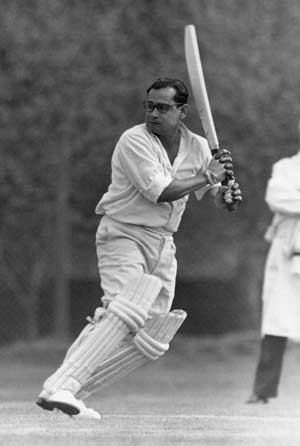
Pankaj Roy: an enigma


 Vijay Merchant’s great legacy of the Bombay cricket gharana was followed to the last detail by a stalwart from the east, Pankaj Roy of Bengal. Roy based his batting approach entirely on the path laid down by his role-model, the one and only VM.


Like Merchant, Roy was a mystery to others and, I dare say, to himself as well! Unfathomable he has been because of the unexpectedness that shrouded his entire cricket career. At one moment he would be on a pinnacle and the very next plummet into nadir.


If Roy became famous as a cricketer, there was no reason for him to be so. He was an outstanding football player, good enough to represent the Indian Football Association XI, which was virtually the national side of the time, against Sri Lanka (then Ceylon).


Yet he chose cricket. How abnormal the departure was can be best judged when we learn that cricket in Bengal in the 1940s was only an insignificant sport compared to the wide popularity that soccer enjoyed. Amazingly the man gravitated towards cricket despite carving a niche as a soccer star for himself at the Calcutta maidan.


At the time the gay brilliance of international cricketers like Shute Banerjee and Prabir Khokon Sen as well as the mercurial Nirmal Chatterjee and the stylish PB Dutta had the crowds thronging to Eden Gardens. But Pankaj Roy opted for the dour, solid outlook of Bombay cricketers as exemplified by his mentor, the former Bengal captain Kartik Bose.


Roy had never played his early cricket on hard, bouncy tracks because the pitches at Calcutta were grassy and afforded considerable deviation to the ball. Yet Roy developed himself to become an excellent player of genuine pace on hard wickets. In the West Indies in 1953 he was always behind the fastest of the expresses. As he was against the fearsome duo of Wesley Hall and Roy Gilchrist in India in 1958.


Later in 1962-63, after being omitted from the Test team, again while dueling against Roy Gilchrist, Charlie Stayers, Chester Watson and Lester King when the quartet was here during the domestic season to give match-practice to Indians against genuine pace, Roy showed he was still the best Indian opening batsman against raw, liquid, sizzling pace. All four of them at the time of their departure loudly claimed in the national print media that Pankaj Roy was the best batsman against fast bowling they had met in India.


But surprising enough Roy never quite mastered the art of combating the moving ball. This too was quite amazing because on the softish, grassy Calcutta wickets the medium-paced seamers dominated. Even the moisture-laden heavy atmosphere assisted the bowlers who relied on swing. At Calcutta both against seam and swing, Pankaj Roy was simply outstanding with prolific performances. To score consistently against superb exponents like Montu Banerjee, Montu Sen, Premangshu Chatterjee, Dattu Phadkar and Durga Shankar Mukherjee was no easy matter.


But he did it repeatedly. Yet the moving ball proved Roy’s undoing time and again, especially on both his tours to England. If anything Roy was an enigma even to those closest to him. I strongly suspect that he could not cope with the less than very bright sun-light in the UK. Wherever he got bright sun-lit skies abroad, in West Indies and in Pakistan, he was a success. In time he had to wear spectacles to clear his suspect vision, of which he was quite unaware!


He put in hours of practice at the nets. He did not believe in rest and recreation. Cricket was his mission, his religion, his life. If he could have spent more than 24 hours a day at cricket, he would have done so most willingly! His work ethic was not normal. His activity and rest all merged into his cricket. Every net session, every friendly match, every club match, every first-class match would have the same focus as if he was playing a Test match. For him a Test match was no different from any other match: the same concentration, the same application and the same execution.


Once I asked him about his preparation for Test matches. He said that he did not differentiate between the levels of cricket in matches. For him the preparation for a club or first-class match would be the same as for a Test match! Still I insisted, “But Pankajda, there must be a difference between preparing to face Roy Gilchrist on one hand and Deblaskhar of Assam on the other.” He smiled, “Raju, are you playing the bowler or the ball? Tui ki pagol? (Are you crazy?). If you concentrate on the bowler’s name, how can you concentrate on the ball? No, no, that was not my way.”


This is Pankajda at his best. Charming and modest always; never trying to impose; no unnecessary technical jargon; no silly motivational theories. He was essentially a simple, uncomplicated man without any pretensions. His life as well as his cricket was entirely based on statistics. He was an instinctive batsman with a fantastic ball-sense.


“How would you motivate yourself, Pankajda?” He was straight to the point, “I have no idea about this modern idea of motivation. My idea always was, when you are playing for a team you should have the urge to help the cause of the team. If this urge does not lead to encouraging yourself to do well, then I do not know what else will help. I always liked to play with the India cap on. That gave me a great thrill and confidence. But you do it your way.” Simple and straight, that is exactly how he was. Marvellous in his simplicity.


Pankaj Roy was never an opener in his early days. Basically a middle-order batter, he began his Ranji Trophy career with a century on debut batting way down the order, as Merchant would in his early days.


Yet Pankaj Roy fashioned himself to become an opener as he later said that he felt that it would be easier to come into national reckoning as an opener. His bull-dog tenacity duly helped him to achieve his primary objective when he went out to open the Indian innings at Delhi with his idol Vijay Merchant in November 1951. After scoring a century in that innings, Merchant retired from Test cricket, leaving his crown for Roy to wear. Roy wore the crown for 10 long years. No other Indian opener matched him in courage, temperament and performance between 1951 and 1961.


In his Test debut series he scored the first of his 5 Test centuries in 1951 against Howard’s England (MCC) team. In that series against Brian Statham, Derek Shackleton, Fred Ridgway among others, Roy scored another century and with an aggregate of at 55.28 cemented his position as the country's foremost opener. His second century at Chennai helped skipper Hazare’s team to record India’s first-ever victory over England.  


 Roy's batsmanship was not based on classic cricket techniques. I doubt if he even cared to study those. His whole cricket evolved from the solid foundation of courage, concentration and application. He relied on his phenomenal mental strength. Without knowing it himself, he was a living example of what the mind could achieve if the powers of concentration were powerful enough. The very fact that he held a bat in his hands was motivation enough for him to apply himself for cent per cent effort.


His powers of concentration were phenomenal. His contemporaries say that he hardly ever spoke, almost never replied, rarely gestured while at the crease. Was he a kind of mendicant while batting? Most probably, yes. An incident of 1967 comes to mind. His last year of club cricket coincided with the first of mine for a 'major' club. He was batting against Suprakash Som, a very lively fast bowler, and Ramesh Bhatia, a genuine seamer of distinction, with utter disdain. Not that he was stroking the ball all round the park but the calm assurance suggested complete contempt for the bowling.


 That was his last innings in club cricket, Sporting Union versus Mohun Bagan at Eden Gardens. In trying to flick, he top-edged Som to test me with a ‘dolly’ catch at mid-on. After the match concluded all the Mohun Bagan players went to the Sporting Union dressing room to shake hands with him. He was very moved and kept smiling.


 I used to idolize him and he knew it. So I took the liberty to say, “Pankajda, I hope you never play competitive cricket again, so that I can claim that I had taken your last catch!” Had a hearty laugh and patted me on the back, “Raju, do not worry. Once I have decided it’s over, it’s over for good.”


 To an impressionable young mind of a 17 year-old teenager, he appeared to be like a machine in motion. Or, shall I say, a sage in deep contemplation? Unflappable concentration, absolute application, totally immersed within himself he appeared to me. He appeared to be in perpetual duel with a ball coming towards him. At the time he was very slow on his feet, the reflex of his prime had gone, yet he was toying with men who were at the top in Indian domestic cricket at the time.


About 15 years later I received a call from my idol, Pankajda. From the other end the voice was crystal clear, “Raju, my eldest son is applying for a job at a MNC. I want you to write a letter of recommendation.” I was aghast, “Who me? You know the world. Everyone respects you. I cannot possibly be the right man.” Now the voice was serious, “I want only you to write, no one else. I know whom I have asked. I shall have the letter picked up from your place tomorrow.” The humility of the man was amazing.


True to Pankajda’s premonition the son deservingly got the job and had the decency to remember, even decades later, to remind me that I had written the recommendation. I embraced him, “I merely carried out the command of my idol. You deserve to be where you are.” Pankajda was universally liked and admired. He could have asked any prominent personality to write the important letter. But then the enigmatic gentleman chose a non-entity like me! Why? Why? Why?


 Pankaj Roy's mysterious ways went beyond his own cricket career. For a man of his vast experience (43 Tests, 2442 runs at 32.56 with 5 Test centuries), he was generally non-communicative. His Bengal team peers say that he hardly ever guided anyone; never offered opinions. Even later when he was a national and State selector, Pankaj Roy's much sought-after guidance or encouragement never reached anyone. Was it his innate unassuming modesty? No one would ever know.


 Even in his life style he continued to confuse. For a man of his wealthy background (the famed zamindars of Bagyakul, now in Bangladesh) he was simplicity personified. He could have employed chauffeurs and have owned top-bracket cars, but he preferred his motor-cycle! Was it just a case of simple living? I doubt if anybody would ever venture forth to unravel the mystery of Pankaj Roy.


Pankajda always maintained cricket was a game of aim. The more diversions you have, that much less would be your concentration. This was as if he was describing Arjuna, the great Pandava, at the archery contest to win Draupadi. Arjuna’s concentration was such that on the reflection he did not notice the fish, nor the eyes but only the iris. Pankaj Roy always maintained, “Please watch only the ball and play accordingly.” Superlative lesson in concentration and application.


For exactly a decade he was the principal opener of India. Apart from Vijay Merchant earlier and Sunil Gavaskar later no other India opening batter has had such a permanent position as Roy had. But even his career-graph is as enigmatic as the man himself. He began his career with an average of 55.28 with 2 centuries in his debut series and immediately after finished his first England tour with 7.71 and 5 noughts in 7 innings!


Against Pakistan on the known Indian wickets he had a lean series but in Pakistan he was a man rejuvenated. On matting wickets he was not used to batting, yet his batting on the mats in Pakistan flowered. Against the world’s best medium pacer Fazal Mahmood – a great match-winner on any pitch, especially on matting – Roy was quite at ease!


On his only tour to West Indies in 1953 he was magnificent with 383 runs at 47.87 with 150 and 85 on the lightning fast track at Kingston. And then on his last tour to England he began with 54 and 49 at Trent Bridge only to confound us with just 76 runs in the next 8 innings. Truly an enigma; a most mysterious performer.


Enigma or not, there is no denying that his place in the history of world cricket will never be erased. For he happens to be the other half of the pair that headed the list of 1st wicket Test match partnerships. Pankaj Roy in the company of Vinoo Mankad registered the world's highest ever opening stand of 413 runs at Madras against New Zealand in 1955. Roy's share was 173, which happened to be his highest score in Test cricket. This 1st wicket record stood for over 50 years till it was overtaken in 2007.


Roy was omitted from the India team in 1961-62 after he had scored 23 against Pakistan at Bombay. Being dropped from the India team, gave the phlegmatic opener a very severe jolt. True to his determined character he set about to prove the selectors wrong. And how well he did is a part of cricket folklore today. Roy scored 4 Ranji Trophy centuries and one Irani Trophy hundred in 4 matches including 2 against Hyderabad, which included the fiery speedster Roy Gilchrist of West Indies. But the expected call never came.


Those two knocks have gone into the annals of cricket forever. He took the bullets of Gilchrist on his chest. Never flinched. Ignored the curses. Once Gilchrist bowled from about 18 yards to injure him but couldn’t. In 1977 I met a graying Roy Gilchrist at Saddleworth Leagues in Yorkshire and asked him about Pankaj Roy. He hesitated for a moment, reflected, “Maan, I tell you that fella had raw guts. Cursed him, hit him but he didn’t back away. He wore glasses on his eyes, maan. Couldn’t break them! Ha! Ha!” Highest compliments from a man whose fearsome pace batters avoided like plague.


 Roy came near to scoring his 5th century in 5 successive innings when he scored 84 against Bombay. The innings was cut short by a dreadful lbw decision. The sportsman that he was, he left the crease without even a shake of his head. To express his disappointment he just patted the ground a few times with the toe of his bat! That’s all; no words, no gestures. Within a month he took his revenge with a superb 132 for Rest of India against the inevitable Ranji Trophy champions Bombay at his favourite ground, CCI’s Brabourne Stadium.


In the Ranji Trophy championship Pankaj Roy was a virtual institution by himself. He made 5149 runs at 66 with no less than 21 centuries, which at the time of his retirement was the highest number recorded by an individual. He served Bengal and East Zone with complete sincerity and total dedication.


But, unfortunately, left a trail of unhappy youngsters who thought that he played a few seasons too many thereby depriving them of their opportunities. And also that he was never around to give anyone a helping hand or words of encouragement. If only he had been a little more communicative to his lesser contemporaries and to the younger lot he would have received their unstinted reverence.


 Even as a national selector he was a misfit because he never found the time or the inclination to watch matches. Hardly kept track of what was happening in domestic cricket championships. But then the enigmatic man as a selector was no less enigmatic than he was as a cricketer.


Arjuna award, Padma award, Sheriff of Calcutta all these honours came to this most deserving cricketer. But what gave him the most satisfaction was when he led India at Lord’s in 1959. India began brilliantly with Desai and Surendranath capturing 7 wickets for 100 but India’s slipshod catching helped England to recover and ultimately win. That Test was his greatest moment and his greatest regret as well.


Once in 1978 I met Pankajda at Eden just after returning from a Ranji Trophy match at Dibrugarh. He put his right-arm on my shoulder and smiled, “Raju, heard from the manager how the captain sacrificed his wicket to enable Fucha (Pranab Roy, his son) to get his Ranji hundred on debut.” The warmth of the arm was full of gratitude. Pranab went for a non-existent double and I left my crease as he was in his 80s.


Personally I consider myself lucky to have played and interacted with my childhood idol. Although quite reticent, he appeared to be fond of me. But he remained an enigma till his last day: totally unfathomable, unpredictable, whimsical.


All along a delightful gentleman of uncomplicated simplicity.


Sunday, 3 July 2022


Vijay Madhavji Merchant: pioneer of our traditional batting approach.


If Professor Deodhar pioneered the classical approach to batting in Indian cricket, it was left to Vijay Merchant to herald to the world the genius of Indian batsmanship.


A lover of traditions and conventions, he followed all the basic traits of batting. He was the model on whom the great tradition of Indian cricket batting approach was structured. Like all great classical musicians, Merchant would start with the slow and steady aalaap and then raise the tenor as the concert rolled on.


He was a perfectionist. The ultimate professional, as distinct from the mere mercenary. He adopted and adapted to methods that suited his temperament and style. Also was the first Indian to reveal to us that no one is born a ‘specialist opener’. One becomes a ‘specialist opener’ by virtue of his inherent qualities, his indomitable spirit and his determined application. No mere branding can make a man a ‘specialist’ in any sphere. 


Moreover, he taught us that every genuine specialist is not merely a one-dimension player. A real specialist also possesses the will and the skills to adapt himself in any other position according to the situation.


Serious cricket addicts are well aware that Vinoo Mankad like Mushtaq Ali  began as a left-arm orthodox spinner, as did Ravi Shastri and all three of them went on to open the innings very successfully for India. Both Pankaj Roy and ML Jaisimha began their successful careers in first-class cricket batting down the order for their respective State teams. In fact, Jaisimha’s early matches for India were also down the batting order.


And the surprise of surprises – the greatest opener of them all – the one and only Vijay Merchant never opened an innings till he set his foot in England in 1936!


While playing for Bombay or for the Hindus in the Quadrangular and Pentangular tournaments, Vijay Merchant was a prolific performer in the middle order. And it may amaze some to know that he even made his debut in Test cricket at number 6!


 The phenomenal batsman ended his first-class career with an average of 72.35, second only to Sir Donald Bradman. Merchant’s specialization was batting. He could bat as well as he did in any batting position. He had the uncanny habit to adapt his batting to the needs of the team and the situation at hand. That was the reason he was a specialist in the real sense of the term.


Many players were willing to be branded as ‘specialist openers’ to enable them to take the short-cut route to the India team. Invariably they failed. They were branded as ‘specialists’ by influential quarters but actually they were back-door entrants. These so-called specialist openers finished their careers with batting averages as low as in the 20s.


The career of Merchant would give us an idea of exactly how transformations take place. Call it destiny, fate or accident, there is no denying that the best laid plans do not always yield the desired results in this most uncertain of all ball-games. Before reaching England in 1936, Merchant had played 12 innings in 2 seasons of Ranji Trophy cricket. Not once did he open the innings. All his phenomenal performances in the inter-State and inter-community matches till 1936 came as a middle-order batsman.


Even in England in 1936 he began as a middle order. Broke a finger in mid-May, and came back in 6 weeks time to find that the team had not yet settled down to any semblance of sanity in the batting order. Constant chopping and changing of the batting line-up had caused immense displeasure and serious problems.


Merchant requested his captain Vijaya Anand (popular as Vizzy) to allow him to open the innings, and thus began a new and fruitful chapter to his Test career. He opted to open and applied himself, I suspect with much serious consideration, to stay away from the intrigues and worse that pervaded and polluted the Indian dressing room on that tour.


As partner he found a man who was a perfect antithesis, the mercurial Mushtaq Ali. The pair put up 203 for the 1st wicket against the likes of Allen, Gover, Hammond, Robbins and Verity. Doyen of cricket writers Neville Cardus waxed eloquent over Vijay-bhai's methods and Wisden Cricketers’ Almanac was quick to confer on him their much coveted "Cricketer of the Year" award in their 1937 edition.


But then why was this middle order batsman so very successful in the unusual position of an opener? Plain and simple, he had both the qualities required to bring about success: willingness and capability, which in modern lexicon would read spirit and skill, just for some stunning alliterative effect.


Vijay Merchant’s batting was based on conventional techniques as exemplified by the MCC coaches and their manuals. He concentrated on every minute detail: grip, stance, head position, balance, front-foot and back-foot movements, etcetera. He relied on constant practice: shadow, net and match. He laid the very foundation of batting technique that found resonance in latter-day technicians like Vijay Manjrekar, Pankaj Roy, Sunil Gavaskar, Rahul Dravid, among others. He emphasized on meticulous planning, long-span concentration, cool temperament and intelligent application.


Before he set sail for England, Merchant had no previous first-hand experience of English conditions. So he diligently set about to prepare himself on the guidance of men who had gone to England in 1932. Merchant invited his friend, the great pace bowler Amar Singh, to bowl to him on wickets laden with early morning dew at the Hindu Gymkhana nets in Bombay. Merchant would even have water poured on the practice pitch before going in to bat!


The detailed and intelligent preparations did not go waste when he volunteered to open in England. The same technique, the same intelligent application, the same dogged will-power of those early morning nets at Bombay had prepared him for the travails that lay ahead in England. And then when the opportunity came, the willingness and the capability were manifest in solidity and success. He was meticulous in his preparations to the last detail.


A plethora of Test Matches today on sun-baked, tarpaulin-covered, feather-bed pitches have turned batting aggregates and averages topsy-turvy. Little do we realize that even 50 years ago the pitches were exposed to the whims of nature and it needed quality batsmanship to succeed consistently on those ‘uncovered’ pitches.


On those ‘uncovered’ pitches of variable bounce, the balls deviated like insane bulls. Unflappable Vijay Merchant’s relaxed approach did not give any impression of worry. On the contrary he made the English critics not only rub their eyes in disbelief but actually wince at his technical supremacy and impeccable temperament. His skills were unmatched.


The 1946 English summer was a terrible summer. Incessant rain and post-war food shortages made life miserable for most, particularly the vegetarians. Merchant merely took the deprivations in his firm strides. He relentlessly batted on and on. On English grass-laden pitches where the well-acquainted Hammond, Hutton and Compton struggled, Merchant scripted 2385 runs at will with an average of 74 .53!


 For a man of strict vegetarian diet, who relied mainly on bread, milk and fruits throughout the entire tour was an achievement by itself. To have played almost without rest for nearly 5 months was without doubt a minor miracle. Merchant did not believe in such luxuries like lack of motivation and staleness.For him cricket was a mission. A mission to be undertaken at whatever the price.


Curiously enough, Merchant did not score even 1000 runs in his Test cricket career. Lest we forget, he played just 10 Test matches over a span of 20 years! And the peak of his career was submerged by the World War II.


However, even in that truncated and scattered Test career his average remains as high as 47.72, without  the scope to thrive on placid ‘designer- pitches’. The moderns also have the opportunity of playing the exact number of Tests that Merchant played (ten) in just one year! How ironical and cruel this game can be.


Merchant's cricket career was full of ironies. Even the start to his Test cricket journey was delayed by political upheavals in the country!  On India’s inaugural tour of England in 1932, Vijay Merchant and DB Deodhar would have been certainties. This was the period when the nationalist movement in the country was in full swing and the ruling Britons employed atrociously tough methods to weaken the movement. Prominent freedom-fighters were put behind bars for flimsy reasons.


In response the Hindu Gymkhana requested several players including Vijay Merchant from attending the trials. Out of sheer patriotism he did stay away from attending the trial and thus he lost out on his cricket career.


 This was a self-respecting individual's sacrifice for the greater cause of his motherland. Very few would have the character to make such sacrifices. They would talk of restraint of trade, free-will, professional income and such other excuse which enhances self-promotion at the expense of national duty.


As it transpired the Test debut was to come 18 months later. Against Douglas Jardine's MCC team at the Bombay Gymkhana ground in 1933-34 in the match noted for Lala Amarnath’s grand hundred on Test debut. Merchant batted way down at no.6 and with his methodical and composed manner impressed one and all. The batting order made no difference at all. It was the skill of the craftsman that mattered.


Hailing from an industrialist family and with a sound academic background, Vijay Merchant was a confident young man, of high principles and values. No fun and frolics for him. His life-style, like his cricket, was studious and of character. He analyzed and rectified; planned and prepared. He knew the value of strong principles. Those were to stand him in great stead on and off the field.


For the sake of the national team, Vijay Merchant volunteered to open way back in 1936. Willingness to serve the cause of the nation was his principal forte. Vijay Merchant and his famous contemporary Vijay Hazare were thought by some critics to be dueling among themselves by way of scoring runs in domestic cricket. That was not the true picture. They were friendly rivals who were happy to have someone to compete with for a common cause. They set each other huge targets and invariably the challenge was accepted. Theirs was the contest to help each other raise themselves to the highest limit.


Vijay Merchant led India in quite a few unofficial Tests without ever revealing any outstanding leadership streak. But when he took the India team on its unofficial Test tour of Sri Lanka (then Ceylon) in 1945-46, it was a foregone conclusion that he would be leading India to UK in the summer of 1946.


However that did not happen. An ageing and out-of-touch Iftikar Ali Khan Pataudi came out of retirement to lead India for the first time. Pataudi was a total failure as a batsman as well as a captain and the extremely talented team lacked leadership. 


 India’s next visit was to Australia for the first time in 1947-48. Merchant was selected to lead. Unfortunately Vijay Merchant declined to go for personal reasons. The actual reasons still remain shrouded in mystery. Whatever the reasons were, Merchant’s absence on that tour weakened the Indian batting strength. Lala Amarnath led the side.


This was the tour where Merchant would have had the opportunity to face the two best fast bowlers in the world at the time, Raymond Lindwall and Keith Miller, on the hard, fast Australian tracks. It was a glorious opportunity to serve the nation when India needed him the most against the might of Sir Don’s Australians.


Alas! That was not to be. Merchant’s non-availability had raised quite a few eye-brows at the time. The responsibility of exhibiting Indian talent fell on the broad shoulders of Vijay Hazare, Dattu Phadkar, skipper Lala Amarnath and Vinoo Mankad.


Soon after the Australia tour, Vijay Merchant again returned to the captaincy saddle but never gave any indication of inspiration to the men who followed him. He appeared to be over-burdened with caution and consequently most matches drifted into drab, drawn affairs. His physical well-being also appeared to be on the decline. His was a care-worn self.


Vijay Merchant became a national selector in the season of 1968-69 when the tourists were from New Zealand and Australia. To his credit some young talents came to the fore and did justice to their undoubted abilities. For four seasons he was the man who helped India to discover several fresh faces who developed into legends.


At the same time quite a few choices appeared to have hardly any conceivable reason. Some of Merchant’s steps were very difficult to decipher. Once on the morning of a Test match he dropped the only genuine pace bowler from the playing XI to include a second off-spinner! Why at all announce the XI the previous day, if you are not certain of what to do?


He once chose a player as a specialist batter who was yet to score a single first-class century at that point of time! Playing Test cricket as a batter without a single first-class century as well as without any prolific run-getting ability in first-class cricket is rarely heard of. If this man had rare potential, what about those men who were scoring hundreds in profusion? Did they lack potential?


His choice of Ajit Wadekar ahead of Mansur Ali Khan Pataudi to West Indies in 1971 evoked strong criticisms from various quarters. But with Wadekar winning two successive series abroad, Merchant’s selection process was vindicated. Our two respective series winners against West Indies and England – Durani and Chandrasekhar – were not considered good enough for both tours! Durani went to West Indies and Chandra went to England.


But prior to that tour to West Indies in the Duleep Trophy final tie he coerced a Zone team to take their reserve wicket-keeper in the playing XI! Ultimately the wicket-keeper went with Wadekar’s team to West Indies only to be sidelined within months for ever. What purpose was served? What was the message given?


Was he a ‘Jekyl and Hyde’ personality? One would never be certain. He was a corporate captain with an industrial empire, but not an inspiring leader of men on the field. He did associate himself with community work but the social service hardly ever extended to needy cricketers in the vicinity. In the 1940s he was the premier opener in the world, yet he made himself unavailable against Bradman’s Australia, thereby weakening India’s batting strength.


With his wide knowledge of cricket, Vijay Merchant was a regular in the All India Radio commentators’ panel. But his rendering, his voice, his inputs hardly cut any ice with the listeners. On-the-field of play, he was certainly ‘the master’ and performed splendidly. But off-the-field in most of his activities he appeared to be at the other extremity. His remarkable consistency was exclusively confined to the crease.


Vijay Merchant’s idiosyncrasies continued till his last Test innings. After unfolding an exquisite innings of 154 against Nigel Howard’s MCC in 1951-52, he suddenly decided that it was time to hang up his boots! He actually wrapped up his Test career on a high, with a century round his strong, stocky shoulders.


Even his surname has a ring of a mysterious incident behind it. Vijay-bhai was born into a very well-known Gujrati family of Thakersay in Bombay. It is believed that on being asked his surname by the European teacher at the time of school admission, someone thought that the school authorities wanted to know his father’s profession!  Promptly the person said, in all innocence, “Merchant.” And the surname stuck for the rest of his life!


Merchant or Thakersay, the great Vijay-bhai was the ultimate ‘Dr Jekyl and Mr Hyde’ of Indian cricket. A batsman of the highest pedigree. A national selector of whimsical decisions.